By Li-Lu Studio · Last updated: 23 August 2026
Search results bear this out. Typing crochet toys into search and opening the ten suggestions underneath it, every single one of the ten was written for someone who intends to make the toy themselves. Not one was for someone who simply wants to own one.
That single count explains the frustration behind this whole category. You are shopping. The results are teaching. So this guide is written the other way round: what a finished crochet toy actually is when it turns up, which of the popular searches point at a completely different object, and where ours stops being suitable.
 Pin it
Why searching for crochet toys mostly returns instructions
The phrase belongs to makers. It was theirs first, and the people writing under it are writing for each other — which is why a search that feels like shopping behaves like a class. Of the ten suggestions sitting under crochet toys when we checked, ten were aimed at making rather than owning.
There is a practical consequence. If you want the object, the words that actually find it are the ones describing the object: the height, the colour, what it holds, where it goes. Searching for the craft finds the craft.
What a finished crochet toy is when it arrives
The numbers here are a stock count of the 117 pieces currently in our own shop rather than a description of the category in general:
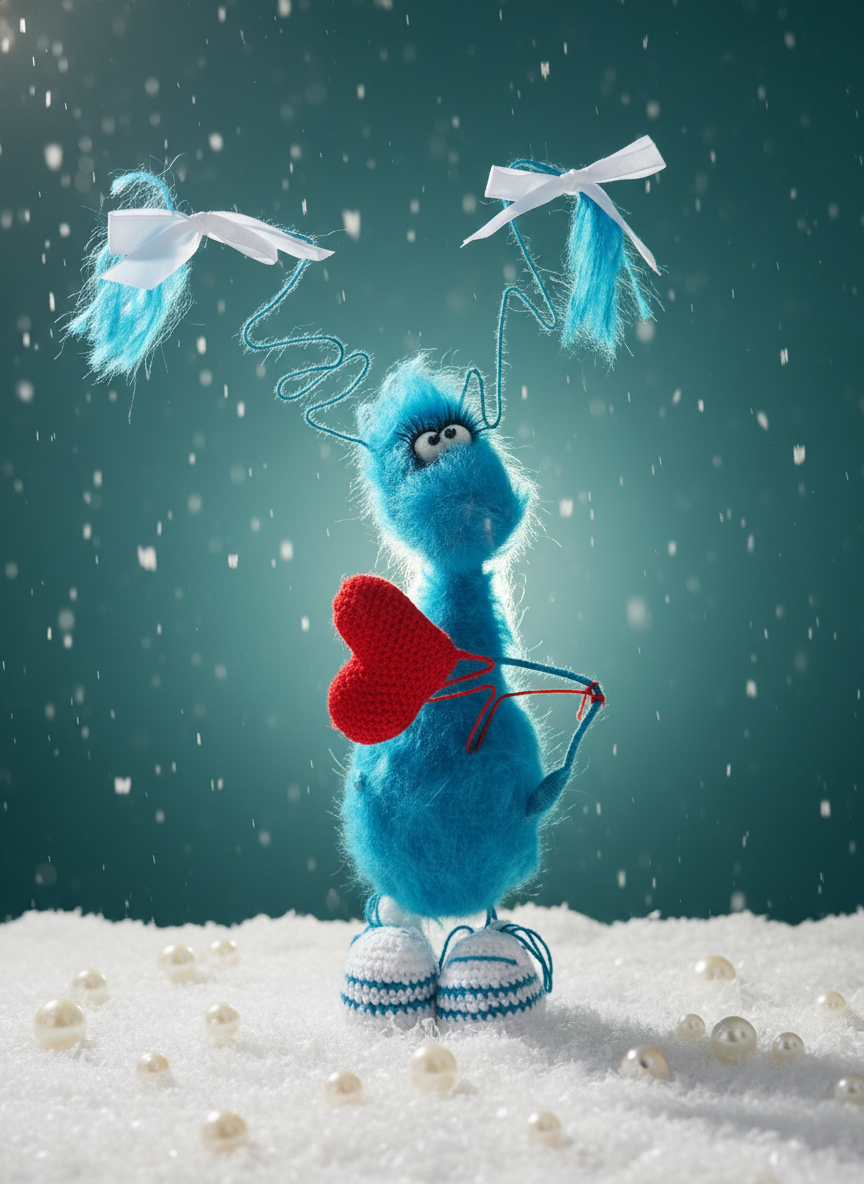
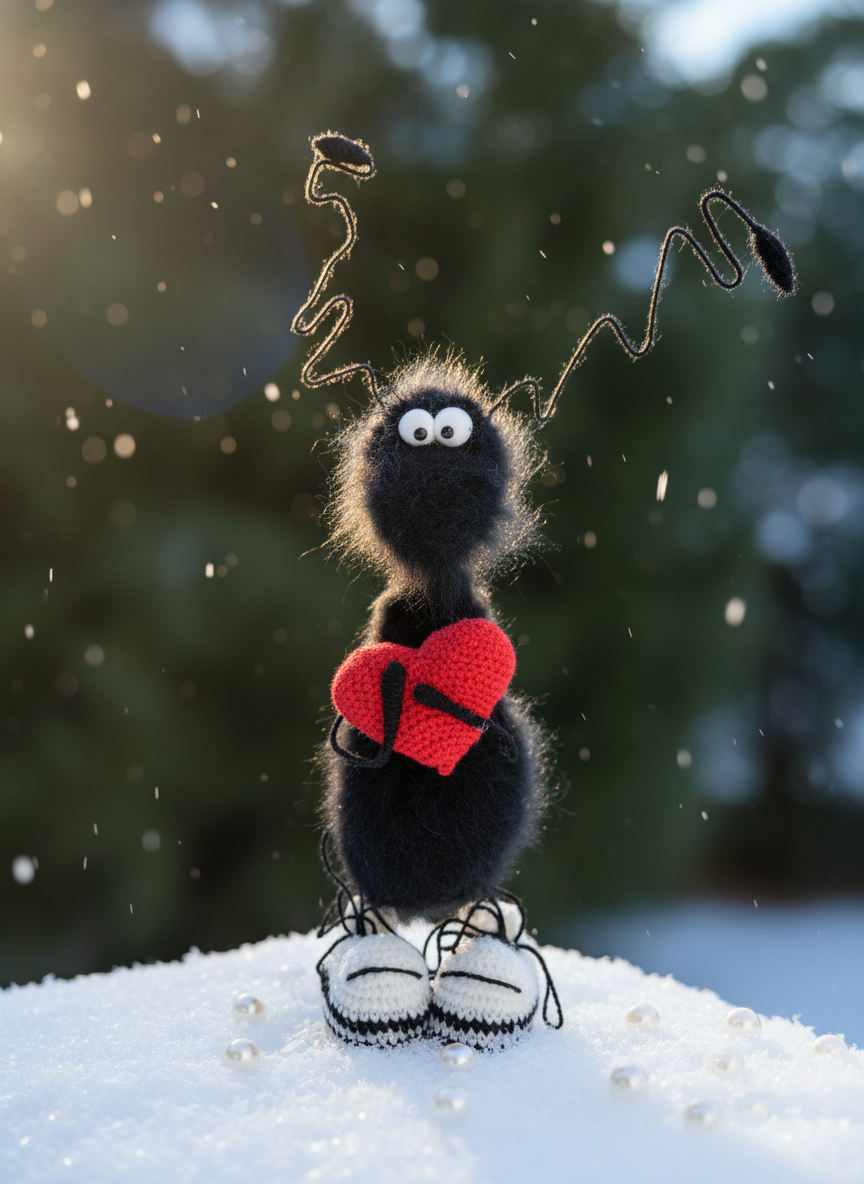
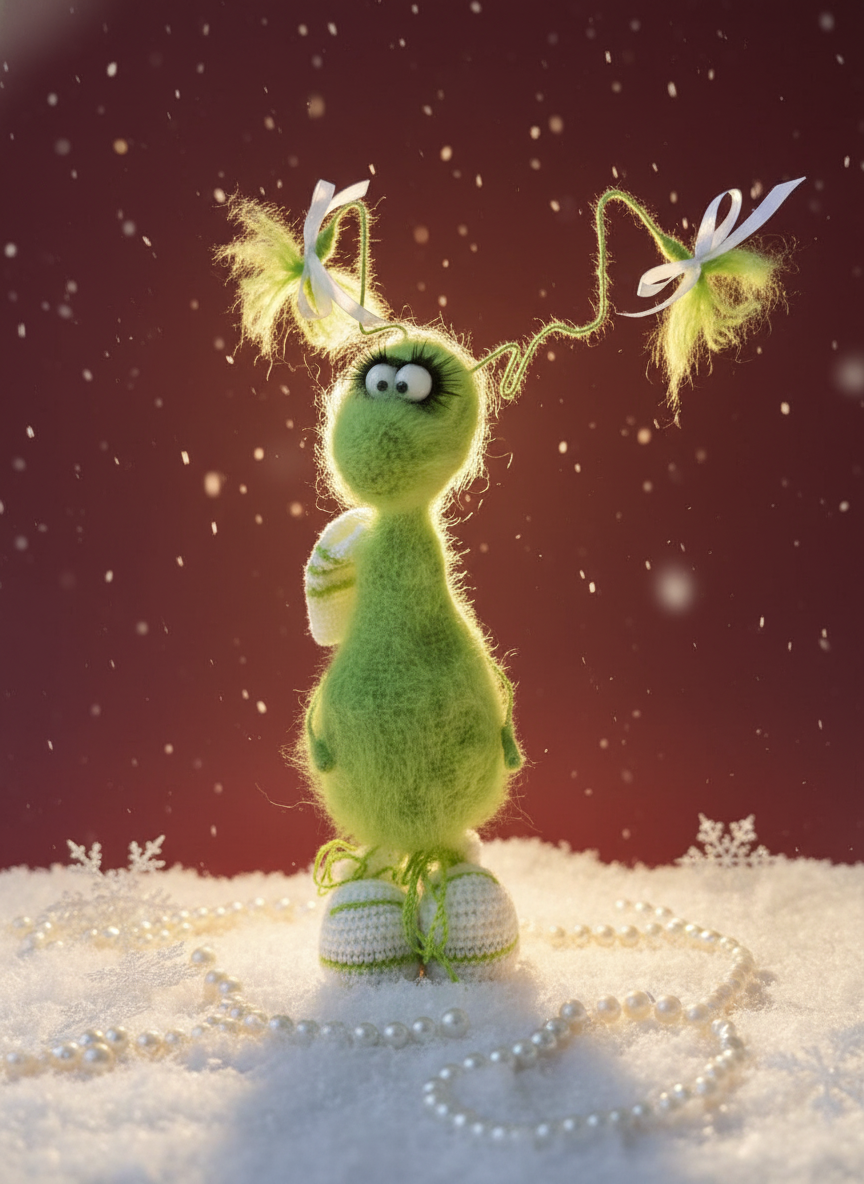
- Every one is 23 cm from the soles of the boots to the antler tips. Predictable scale, unpredictable colour.
- 66 hold a heart, 52 carry a small shoulder bag. That choice changes the meaning of the piece more than the colour does.
- Seven colours exist: pink (43), green (23), blue (21), black and white (19), red (8), yellow (7), orange (1).
- The antlers have wire inside them so they hold a shape and spring back. This is the detail that decides most of the rest of this article.
- No two are the same. Faces are set by hand, so a photo of one is a photo of that one, not of the range.
A finished piece also weighs almost nothing and survives the post without a box full of padding — soft body, nothing glazed, nothing that chips.
Crochet soft toys that live on a shelf rather than a bed
Crochet soft toys split into two uses that look identical in a photograph. One is made to be squeezed, dragged around and washed. The other is made to be looked at, and it stands up on its own.
Ours is the second kind. The boots are laced, the head tilts, and it stays where it is put. That is a feature on a bookshelf and a problem in a bed, so it is worth deciding which of the two you are shopping for before the colour question starts.
 Pin it
Crochet baby toys and crochet toys for babies: why ours is not one
Handmade, not printed — every figure finished by hand
No two batches are quite identical. Pick a colour and a detail — heart or bag — and it's made to be shelf-ready.
This is the clearest line in the whole category, so we will say it plainly rather than bury it in a note at the bottom. Our figures are not baby toys. The antlers are wire-cored, and wire inside a soft body is fine on a shelf and wrong in a cot.
If you are buying crochet baby toys, the questions worth asking any maker are the same three every time: what is inside the body, how the eyes and any small parts are attached, and whether the whole thing can go in a wash. We can answer the first honestly and it rules us out, which is the useful answer even though it costs us the sale.
The version of this purchase we do fit is the nursery shelf — the piece that sits above the changing table and is looked at, not handled. Same room, different object.
Crochet sensory toys, montessori toys and fidget toys are a different purchase
Three searches that come up constantly next to ours: crochet sensory toys, crochet montessori toys, crochet fidget toys. All three are bought for what a child does with the object — texture, grip, repetition, a specific developmental job the parent has in mind.
Ours is bought for where it sits. We do not make sensory, montessori or fidget pieces, and steering you into one of ours under those words would waste your money and your time. If that is what you came for, the honest advice is to shop with makers who name the function on the label, because the function is the whole point of the item.
Crochet cat toys and crochet dog toys: not the same object at all
Crochet cat toys and crochet dog toys share the word and nothing else. They are made to be destroyed — batted under the sofa, chewed, replaced. Cost per item is low on purpose, and nobody minds when one is lost.
A handmade figure with wire inside it is the opposite of that, and it should never be handed to a pet as a plaything. If it lives in a house with a cat who climbs, put it somewhere the cat cannot reach, the same way you would with anything small on an open shelf.
Crochet kids toys: the age this actually works for
Crochet kids toys and crochet toys for kids cover an enormous age range, and the wire is what splits it. For a child small enough to put things in their mouth or bend something to see what happens, this is not the right object.
Where it does work is the age when a child starts arranging their own shelf — when things get positioned, given names and moved around rather than dragged about. That is the point at which a piece that stands up on its own becomes more interesting than one that flops.
Five things to check before buying a finished crochet toy
Handmade, not printed — every figure finished by hand
No two batches are quite identical. Pick a colour and a detail — heart or bag — and it's made to be shelf-ready.
- The height in centimetres, not the photograph. Photographed alone against a plain backdrop, a 12 cm piece and a 30 cm piece look identical.
- What is inside. Wire, beads, a rattle or nothing at all — this decides who the piece is safe for more than any other detail.
- Whether the photo is the piece. With one-at-a-time making, the image should be of the exact item being sent. If the same photo covers a whole range, ask what arrives.
- How the colour was shot. Ours are photographed on a pale backdrop, so every colour reads slightly warmer against a normal wall than it does on screen.
- The date you need it by. Single handmade pieces are not restocked. If the exact one is the point, leave room for the post rather than deciding on the last evening.
 Pin it
Crochet toys ideas when the shelf is the point
A few placements that work, taken from what people tell us they did with theirs: at the end of a row of books so the row has a stop; on a desk next to the monitor, where it is the only non-work object; on a nursery shelf out of reach; on a windowsill where the light moves across it during the day. More on the small-piece version of this is in our guide to cute home shelf decor.
As a gift, the same logic applies as anywhere else we write about: a finished object stays visible, and a consumable does not. That is covered in detail in birthday gifts for a best friend.
Who this is not for
- Anyone shopping for a baby. Wire inside, decorative build, not washable as a whole.
- Anyone who wants to make one. Nothing here teaches that, and we do not sell instructions.
- Anyone who needs two the same. Faces are set by hand and differ piece to piece.
- Anyone who needs a specific colour on a specific date. Small groups run out — there is exactly one orange.
Crochet toys: questions we get asked
Are these crochet toys or decorations?
Decorations, in the sense that matters: they stand on their own, they are not built for handling, and the antlers have wire in them. Toy is the word people search with, so it is the word we answer to.
Can a child have one?
An older child who arranges a shelf, yes. A baby or a toddler, no — the wire rules that out and we would rather say so here than after it arrives.
Do you make crochet cat toys or dog toys?
No. Those are made to be chewed and replaced, and ours is the opposite of that. Keep it out of reach of a cat who climbs.
How big is 23 cm in practice?
About the height of a hardback book. It fits a standard bookshelf without moving anything, which is the most common place ours end up.
Is the one in the photo the one I get?
Yes. Each piece is made and photographed on its own, so the image on the page is the exact figure that gets posted.
Can I wash it?
Not as a whole. Surface clean only — another reason it belongs on a shelf rather than in a cot.
Looking for the finished thing? Every figure is a single piece — when it is gone, that exact one is gone. Browse all handmade figures →
About the author. Li-Lu Studio makes every figure in this guide by hand in the UK — 117 of them in the shop so far, counted one by one. We write about what actually gets kept on a shelf, and about what we do not make, because sending someone to the wrong object costs them more than it costs us.